
BY THE END OF THIS GUIDE
- Separate connector count, amplification, volume and mix.
- Plan distribution without silently reusing an output that is already occupied.
- Keep connection proof separate from guaranteed listening level.
01 · Decide what each person hears
Create one row per listener and list the signals they need. If all rows contain the same program and only the level changes, you are distributing one mix. If the content differs, you need independent routes as well as volume control.
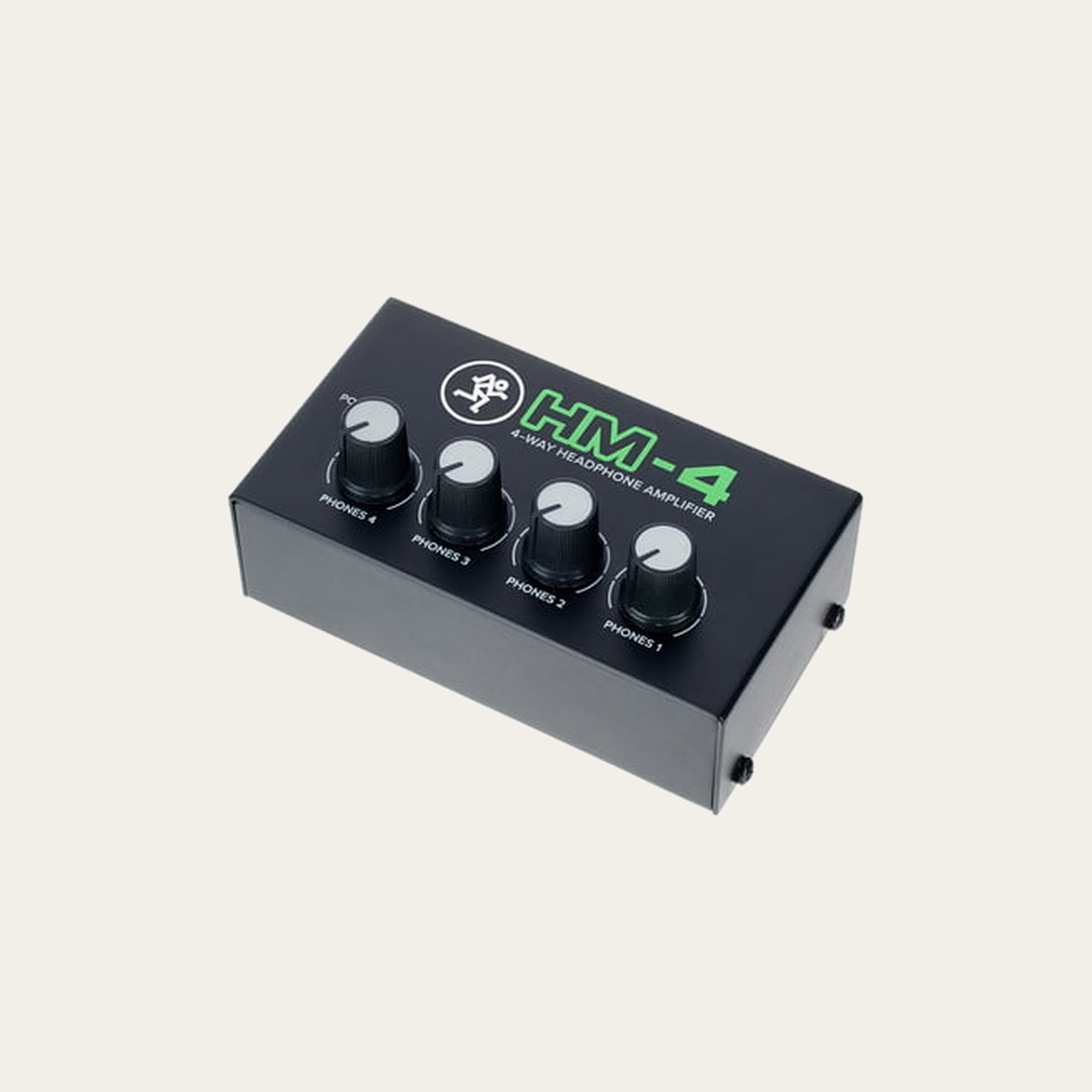
A four-output headphone amplifier can provide several level controls while still receiving one shared stereo source. Do not describe that as four independent mixes unless the routing documentation supports it.
02 · Identify where the mix comes from
A distributor needs a source. Draw the exact interface or mixer output, the cable and the amplifier input. Adding a headphone amplifier to the shopping list does not define the signal feeding it.
If the intended source outputs are already feeding speakers, they cannot be reused invisibly. Splitting, switching or adding a second route is a separate design decision.
03 · Count real units and adapters
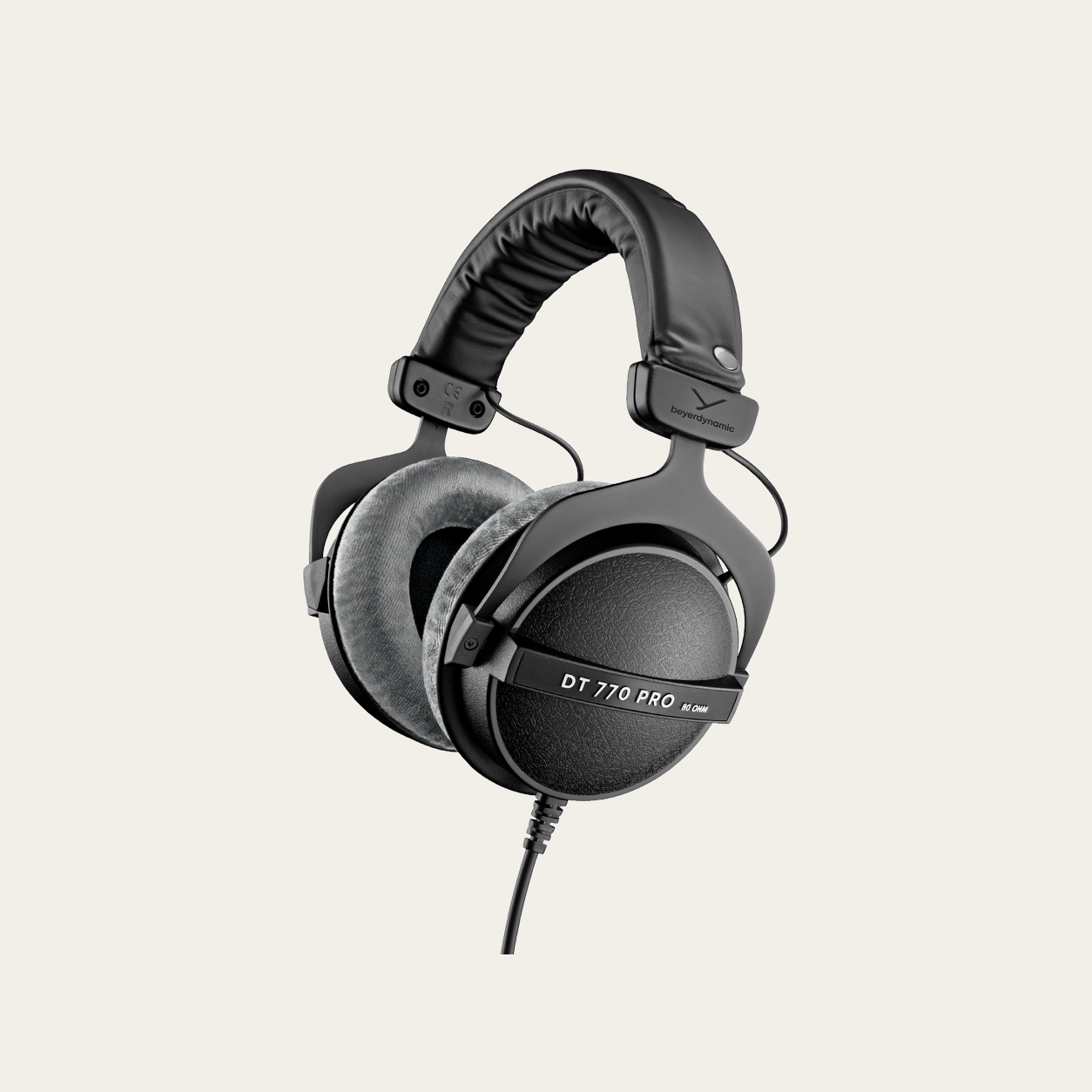
Count the actual headphones, their connectors and any required adapters. Do not assume accessories are included because they appear in a photograph. Keep exact model variants separate when impedance or connector options differ.
Equipment already assigned to another path should not be subtracted twice from your inventory. Quantities matter as much as product names in a multi-listener setup.
04 · Connection does not equal guaranteed volume
A documented connector path proves only part of the problem. A numerical listening target also requires applicable output and headphone electrical data.
A result such as “distribution documented, level still to verify” is useful. It should not be rewritten as “drives any headphone”, and an unresolved result does not prove that the hardware is physically incapable.
05 · Final buying check
Review the desired program per listener, source output, cable path, power and headphone load separately. Then calculate what new equipment is actually required.
If you need different mixes but the proposed architecture only shares one, the budget cannot fix the missing function without changing the routing.
Before you record.
Common questions.
Can I use a simple passive splitter?
Do not choose it only by socket count. It changes the load and shares signal/level in a different way from an active distributor.
Do four volume knobs mean four mixes?
Not necessarily. They may control the level of one shared source. Check the topology of the exact model.
Can I use a passive splitter for several headphones?
It can distribute a signal in some cases, but it does not add independent level control or prove that the source can drive every load correctly. Check distribution and output capability for multiple listeners.